This article is part of Gabochie Design’s construction intelligence platform. For accurate cost estimates, try our free Residential Cost Calculator or ROI Calculator.
Ghana has some of the most beautiful house in West Africa. From the rammed earth compounds of the Upper East to the glass-and-steel villas of East Legon, the country’s built environment reflects the richness of its culture, the ambition of its people, and the evolution of its economy.
If you are planning to build in Ghana — whether as a local builder or a returning diaspora — understanding what makes Ghanaian homes beautiful, inside and out, will help you make better design and investment decisions. This guide covers the architectural styles, defining design features, best locations, and practical choices that separate a truly beautiful house from one that merely looks good in photos.
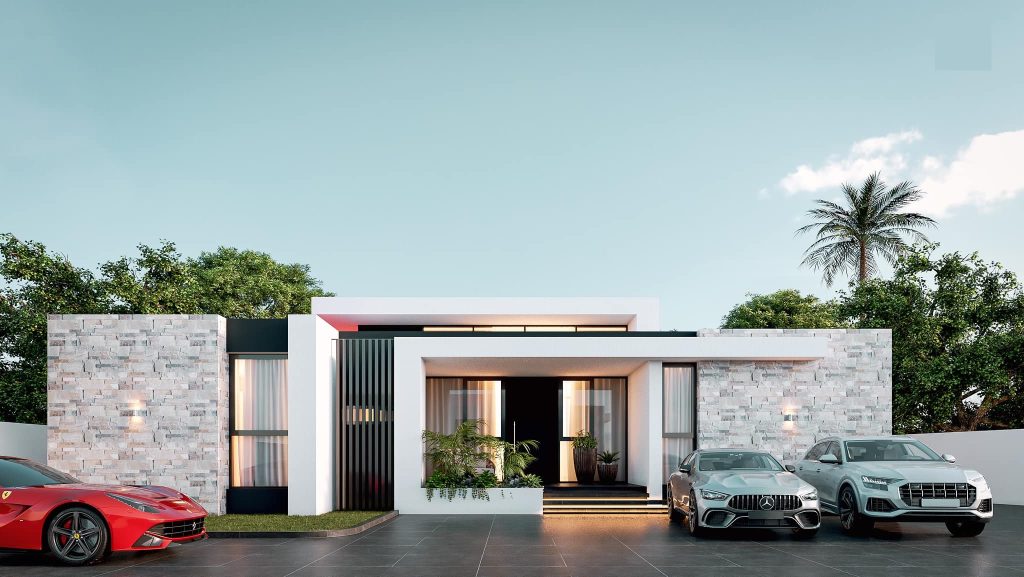
The Architecture of Beautiful Houses in Ghana
Ghana’s residential architecture is not a single style — it is a living conversation between tradition and modernity, between what the land provides and what the economy allows.
Traditional Ghanaian Architecture
The roots of Ghanaian domestic architecture lie in the courtyard house — a building organised around an internal open space that serves as the social heart of the compound. In the Northern Region, this tradition produces the famous painted mud houses of the Kassena people, with intricate geometric patterns applied to earthen walls. In the Ashanti region, the traditional palace architecture of Manhyia and the royal compounds of Kumasi demonstrate a mastery of space, proportion, and craft that long preceded modern construction methods.
What makes these traditional houses beautiful is not ornament for its own sake — it is the deep coherence between building form, climate, material, and the social structure of the people who live in them. Thick walls keep interiors cool. Deep overhangs shade windows from the tropical sun. Courtyards create natural ventilation and gathering space.
Today’s most thoughtful Ghanaian homes draw from this tradition — not by imitating mud construction, but by respecting its principles: shade, breeze, togetherness, and rootedness.
Colonial and Post-Colonial Architecture
British colonial architecture left a distinctive mark on Ghana’s cities. The double-storey bungalows of Victoriaborg and Ridge in Accra, with their wide verandahs, louvred shutters, and pitched metal roofs, represent a hybrid form that adapted European building traditions to the Ghanaian climate. Many of these buildings, though aging, remain among the most character-rich houses in the country.
The post-independence period produced another wave of distinctive architecture — the state housing estates of Tema, designed by Greek architect Doxiadis, which brought modernist planning principles to Ghana’s first planned industrial city. The grid streets and semi-detached bungalows of Tema Communities 1–12 have a quiet rationalism that has aged well.
Contemporary Ghanaian Residential Architecture
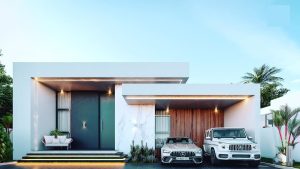
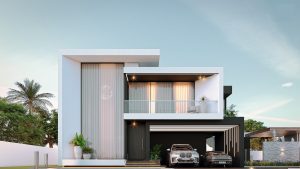
The most exciting residential architecture being built in Ghana today blends contemporary global influences with Ghanaian spatial values. The defining characteristics of the best current work include:
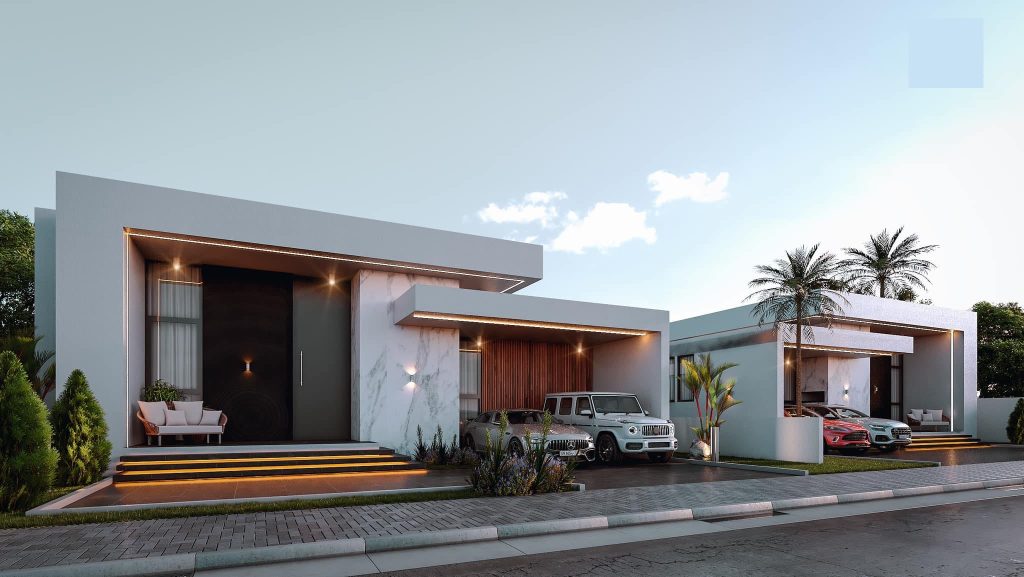
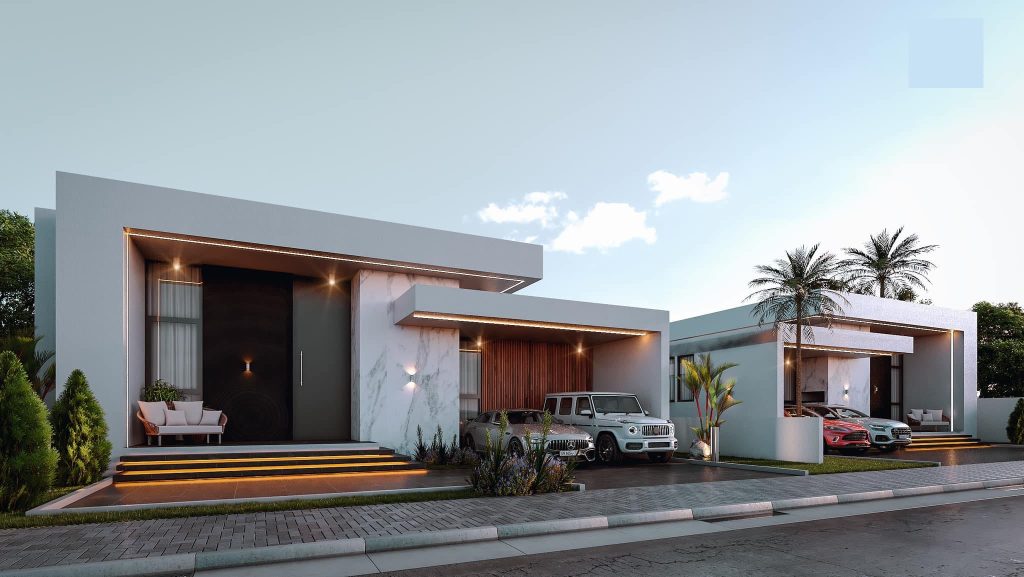
Strong external form: Clear volumes, bold roof lines, and deliberate use of contrast between materials — white render against natural stone, glass against solid wall, raw concrete against warm timber accents.
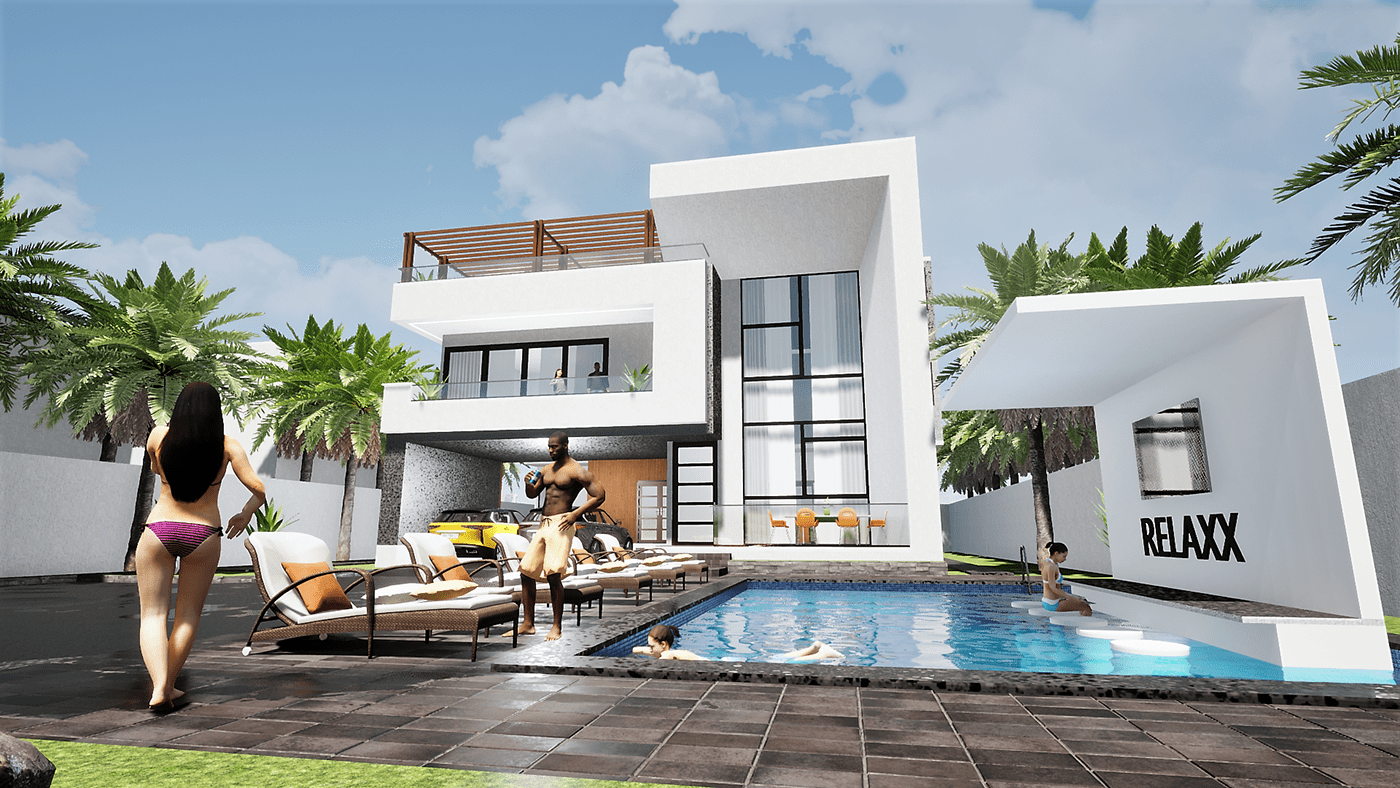
Indoor-outdoor integration: Beautiful Ghanaian homes embrace the climate rather than fight it. Large covered terraces, sliding doors that open entire living areas to the garden, and pools positioned to capture natural breezes are hallmarks of well-designed contemporary builds.
Quality materials used honestly: The best houses in Ghana do not hide their materials — they celebrate them. Exposed face brick, polished concrete floors, stone feature walls, and natural wood are used with confidence rather than covered over with paint or cladding.
Landscaping as architecture: A beautiful house in Ghana is inseparable from its compound. Mature trees, paved courtyards, water features, and well-maintained lawns are as important to the impression of quality as the building itself.
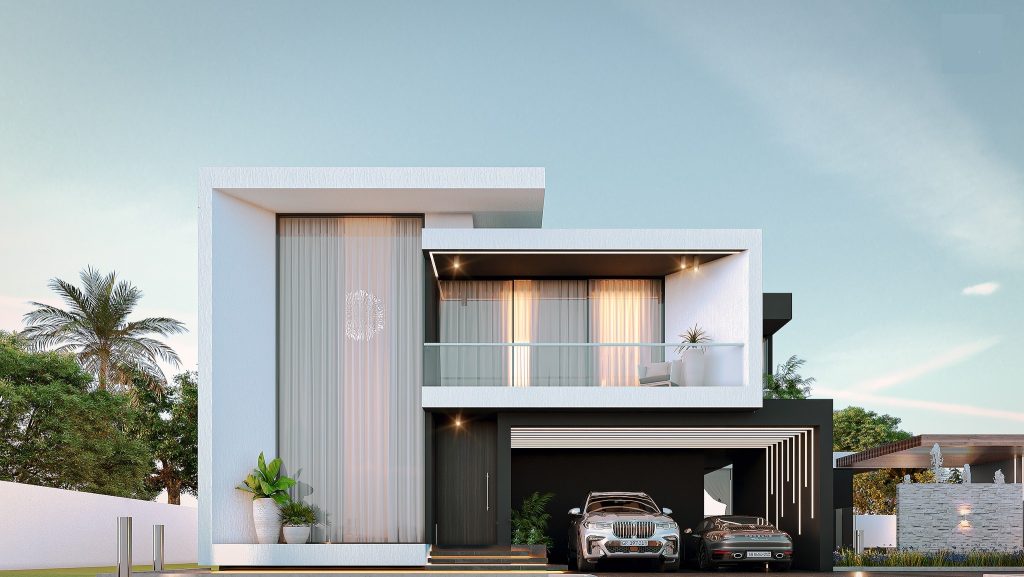
Key Features That Define Ghana’s Most Beautiful Homes
The Covered Verandah or Terrace
Almost every beautiful house in Ghana has a significant covered outdoor space — whether a formal front verandah, a rear patio, or a wrap-around terrace. This is not a luxury feature. In Ghana’s climate, a deep covered terrace is a functional necessity — it provides shade, extends living space into the outdoor air, and creates a transitional zone between the public street and the private interior.
Budget at least 15–20% of your ground floor area for covered outdoor space if you want your house to function well and look generous rather than cramped.
The Compound Wall
In Ghana, security is not an afterthought — it is an integral part of residential design. A well-designed compound wall is not merely functional; it frames the house, defines the boundary of the property, and makes the first impression on every visitor and passerby.
Beautiful compound walls in Ghana are characterised by consistent finish quality (no crumbling render or exposed block), appropriate height (high enough for privacy and security but not fortress-like), well-proportioned gate openings, and planting along the interior perimeter that softens the enclosure.
The Roof Profile
More than perhaps any other single element, the roof determines the character and beauty of a Ghanaian house as seen from the street. The most beautiful houses in Ghana tend to have one of three roof types:
The hipped roof: Four sloping sides meeting at a central ridge. The most classical and most loved roof form in Ghana — it reads as solid, settled, and permanent. Long span aluminium or stone-coated steel tiles in a warm tone complement this form.
The flat or mono-pitched contemporary roof: Increasingly popular in architect-designed homes, especially those influenced by contemporary South African and international residential architecture. Requires high-quality waterproofing — flat roofs in Ghana that leak are a common disaster.
The combination roof: Elements of both forms — typically a hipped main roof with flat-roofed single-storey elements extending outward as covered terraces or service wings. When executed well, this produces the most architecturally interesting residential silhouette.
Natural Light and Openings
Many Ghanaian homes that look impressive from the outside are dark and unwelcoming inside. Beautiful houses pay as much attention to natural light as to external appearance. Key strategies include: large window openings on southern-facing elevations (to catch daylight without direct sun), light wells or atria in double-storey homes, and careful placement of openings to create cross-ventilation through every room.
Material Quality and Finish Consistency
The single greatest differentiator between a beautiful house and an ordinary one in Ghana is the consistency of finish quality throughout the property. Beautiful houses do not have premium tiles in the living room and poorly laid floor screed in the corridor. They do not have a magnificent gate and a crumbling garden path. The quality is consistent from gate to rear wall.
This consistency requires two things: a budget that extends to every element (not just the headline items), and a site supervisor who maintains standards across all artisans throughout the project.
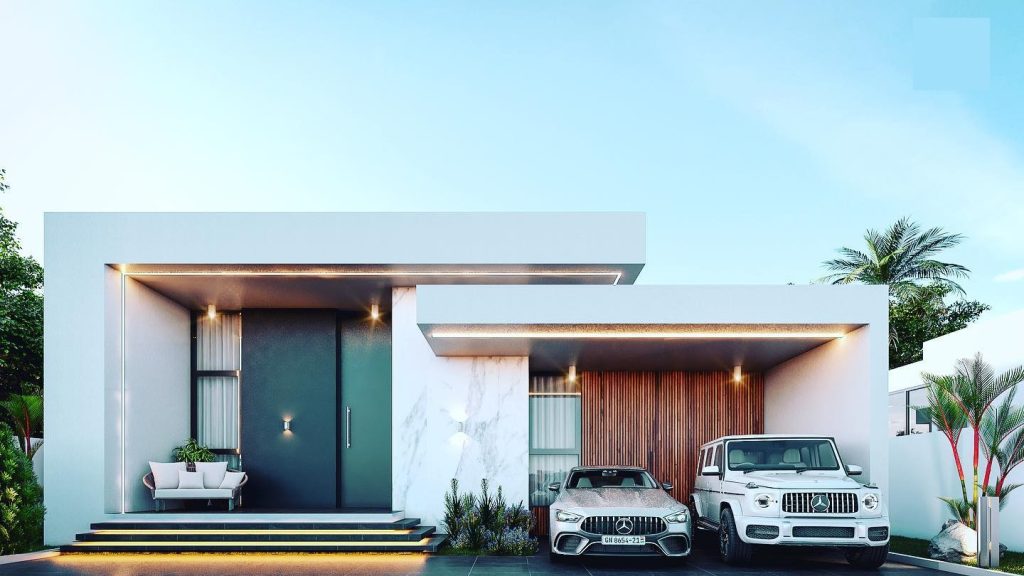
Where to Find Ghana’s Most Beautiful Houses
Accra
East Legon and its extensions remain Ghana’s premier residential address. The area combines large plot sizes, tree-lined streets, and access to the best schools and amenities in the country. The architecture ranges from late-20th-century estate houses to extraordinary contemporary villas built by returning diaspora and business families. GHS 2,000,000+ at premium finish is the realistic price point for new builds here.
Airport Residential and Cantonments offer some of Accra’s most impressive older residential architecture — the colonial-era bungalows of the diplomatic zone and the post-independence villas of the senior civil service quarters. New builds here command premium prices driven primarily by location rather than build quality.
Trasacco Valley and Aburi Gardens area represent a newer wave of planned residential luxury — estate living with controlled architecture, security, and amenity infrastructure. The design standards within these developments tend to be higher than self-build equivalents because they are governed by estate design codes.
Adenta, Ashongman, and the Oyarifa corridor represent the new middle-class frontier — areas where well-educated families and diaspora returnees are building genuinely beautiful homes at a fraction of the cost of East Legon. Plot sizes are generous, roads are improving, and the standard of construction is rising quickly.
Kumasi
The Garden City of Ghana produces some of the country’s most beautiful houses, particularly in the areas around KNUST, Nhyiaeso, Ahodwo, and the SSNIT Estate. Kumasi architecture tends toward more classical forms than Accra — gabled roofs, formal symmetrical facades, and large compound gardens. The cost of building here is 8–10% lower than comparable builds in Accra.
Ready to Design and Build?
- Estimate your build cost with our free Residential Cost Calculator
- See 2026 build costs by bedroom size
- Book a design consultation to start planning your home
Tamale and the North
Northern Ghana’s residential architecture is undergoing rapid change — new investment and a growing professional class are producing increasingly sophisticated homes in Tamale’s better neighbourhoods, including Kalpohin Estates and the areas near the university. The most beautiful homes here are those that maintain a connection to Northern vernacular tradition — earthen tones, flat or low-pitched roofs, and open courtyard plans — while incorporating contemporary comfort and finish quality.
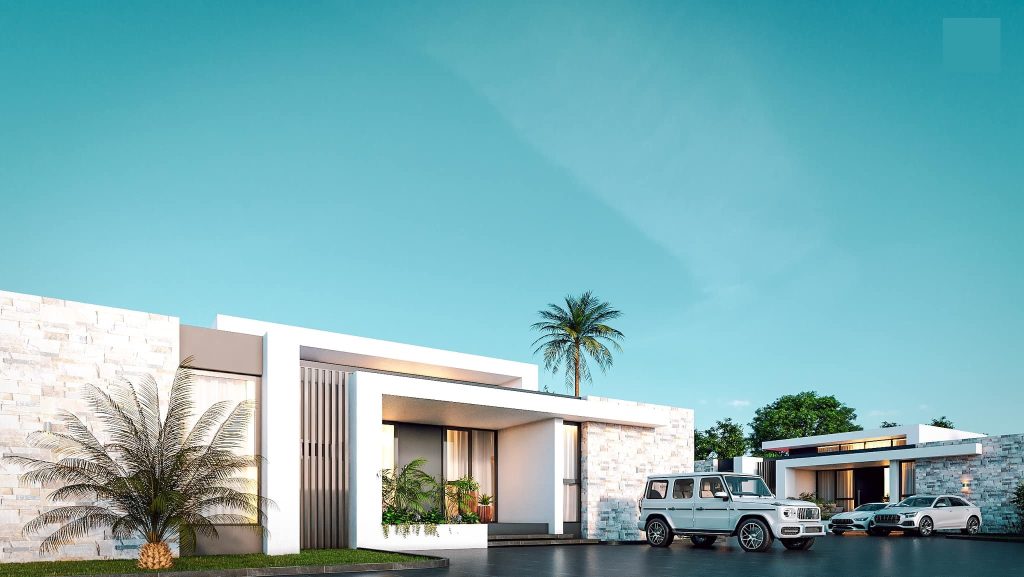
Building Your Own Beautiful House in Ghana
A beautiful house in Ghana is not primarily a product of money — it is a product of decision quality. The most common reason houses in Ghana fall short of their potential is not budget shortfall; it is rushed decisions made under time pressure without proper professional guidance.
Three decisions determine the outcome more than any other:
Choose the right architect. An architect who understands how to design for Ghana’s climate, culture, and construction environment — and who takes the time to understand what you actually want — will produce a design that is both beautiful and buildable within your budget.
Do not compromise on supervision. Beautiful houses are built by supervised artisans. The site supervisor who checks every wall for plumb, every tile for level, and every joint for seal is the person who turns a good design into a beautiful house.
Finish consistently. Reserve budget for the finishing phase. Many Ghanaian houses are structurally excellent but visually disappointing because the budget ran out before the tiling, painting, and landscaping were done properly. Phase your budget so that finishing receives the investment it deserves.
Read Also:
Professionals You Need to Build Your House In Ghana
5 Ways to Become a House Owner in Ghana
Building Your House In Ghana-The Quick Easy Guide
How much is a plot of land in Ghana?
Interested in building your own beautiful house in Ghana?
FAQ:Beautiful Houses in Ghana
Q: What are the popular architectural styles for beautiful houses in Ghana?
A: Ghana has a rich architectural heritage that includes Ghanaian Vernacular, Colonial, and Modern architecture. These styles are reflected in many beautiful houses in Ghana.
Q: Can I get a custom design for my beautiful house in Ghana?
A: Yes, you can get a custom design for your beautiful house in Ghana. You can work with an architect or a design firm to create a design that fits your style and budget.
Q: What materials are commonly used to build beautiful houses in Ghana?
A: Commonly used materials for building beautiful houses in Ghana include brick, concrete, wood, and steel. Local materials such as mud and thatch are also used in traditional houses.
Q: Are there eco-friendly houses available in Ghana?
A: Yes, there are eco-friendly houses available in Ghana. These houses are designed to minimize their impact on the environment and to reduce energy consumption. They may include features such as solar panels, rainwater harvesting, and green roofs.