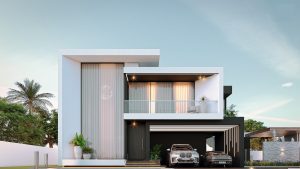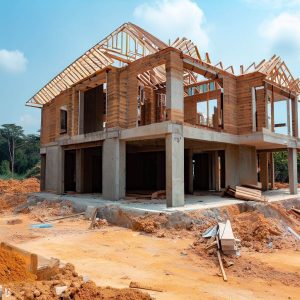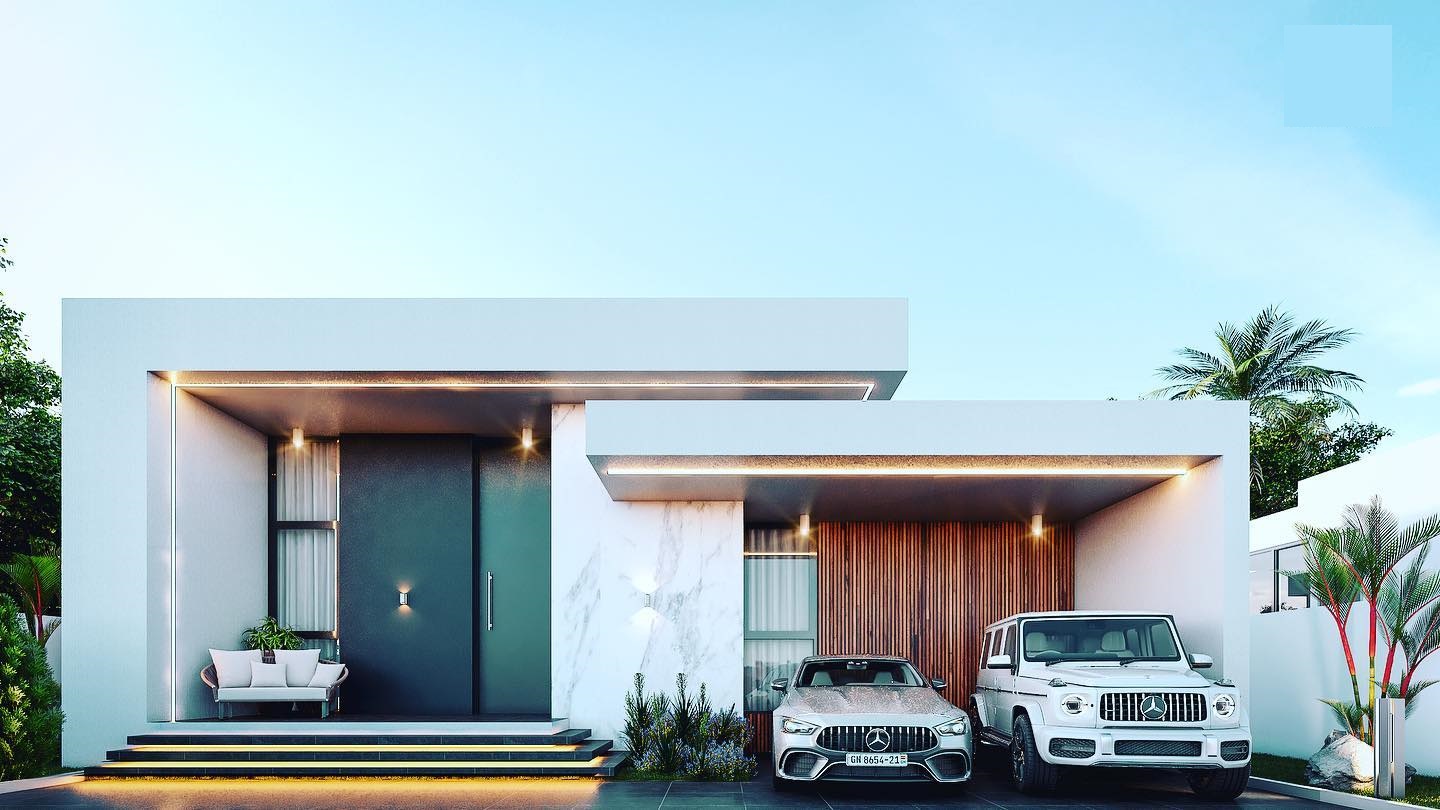
The 3-bedroom house is Ghana’s most-built, most-searched, and most-misquoted residential build. Ask ten people how much it costs and you will get figures ranging from GHS 300,000 to GHS 2,000,000. All of them will be partially right — and every one of them will leave out something important.
This guide cuts through the noise. We give you the real 2026 numbers: costs by finish level, a phase-by-phase itemised breakdown, how location changes your budget, the hidden costs that ambush first-time builders, and a practical phased build strategy if you cannot fund the whole project at once.
Updated April 2026. All figures reflect current Ghana construction market conditions. Exchange rate reference: $1 USD ≈ GHS 11 | £1 GBP ≈ GHS 14.97. Verify current rates before any international transfers.
What Does a 3-Bedroom House in Ghana Look Like?
A standard 3-bedroom house in Ghana typically covers 110–160 square metres of floor area. The classic layout includes three bedrooms — ideally with the master bedroom en suite — a family bathroom serving the other two rooms, a living room, a dining area, a kitchen, a store or utility room, and a covered verandah or porch.
More generous designs add a guest toilet off the living area, a separate family lounge, a laundry room, or a boys’ quarters. Every addition increases your budget. The figures in this guide are for a standard 3-bedroom layout without these extras unless stated.
The 2026 Cost Summary by Finish Level
The single biggest variable in a 3-bedroom build is not location or contractor — it is finish level. The same structural shell can cost GHS 400,000 at basic finish or GHS 1,500,000 at premium finish. Here is what each level actually means and what it costs.
| Finish Level | GHS Range | USD Equivalent | GBP Equivalent |
|---|---|---|---|
| Basic | GHS 400,000 – 650,000 | ~$36,400 – $59,100 | ~£26,700 – £43,400 |
| Standard | GHS 650,000 – 1,100,000 | ~$59,100 – $100,000 | ~£43,400 – £73,500 |
| Premium | GHS 1,100,000 – 2,000,000+ | ~$100,000 – $181,800+ | ~£73,500 – £133,600+ |
These figures cover construction from foundation to handover on your own land. They exclude land purchase, registration, building permit, professional fees, and utility connections. Add 15–20% to cover these additional costs.
What basic finish means
Cement screed floors throughout, louvre windows, plain painted walls, basic plumbing fixtures (close-coupled WC, simple basin, shower only), standard panel doors, basic electrical fittings. Fully liveable but without comfort features. This is the level most people achieve at the end of Phase 1 of a phased build.
What standard finish means
Ceramic or porcelain floor tiles throughout, aluminium casement or sliding windows, overhead showers and mixer taps in at least the master bathroom, security doors at main entrance, a basic fitted kitchen with tiled countertop or simple granite, exterior cladding or textured paint, ceiling fans and adequate electrical points. This is the target level for most middle-income family builds.
What premium finish means
Large-format porcelain or marble tiles (600x600mm or larger), hardwood or engineered timber doors, fully fitted modular kitchen with granite or quartz countertops, walk-in shower or bath in the master en suite, POP or coffered ceilings, smart electrical system (scene control, motion sensors), stone or face brick feature walls, air conditioning in bedrooms, automated compound gate, external landscaping. This is the standard you find in East Legon, Cantonments, and Trasacco.
The Complete Phase-by-Phase Cost Breakdown
This is the table most guides do not give you — because it requires actual construction knowledge to produce accurately. Here is a realistic itemised cost breakdown for a standard-finish 3-bedroom single storey house of approximately 130 square metres in Accra in 2026.
| Phase / Work Item | Cost Range (GHS) | % of Total Build | Notes |
|---|---|---|---|
| Site preparation and clearance | 25,000 – 50,000 | 3–4% | Clearing, levelling, hoarding, site cabin |
| Foundation and substructure | 130,000 – 200,000 | 14–18% | Excavation, blinding, reinforced strip or raft foundation, backfill, hardcore |
| Superstructure — frame | 80,000 – 130,000 | 9–12% | Columns, ring beam, lintels — steel and concrete works |
| Superstructure — blockwork | 70,000 – 110,000 | 8–10% | All internal and external wall block laying |
| Roof structure (carpentry) | 55,000 – 90,000 | 6–8% | Trusses, purlins, battens — hardwood or treated timber |
| Roof covering | 45,000 – 90,000 | 5–8% | Long span aluminium or stone-coated steel sheets, ridge, gutters |
| Electrical installation | 50,000 – 90,000 | 6–8% | Rough-in conduits, cabling, DB board, all fittings and final fix |
| Plumbing installation | 45,000 – 80,000 | 5–7% | Water supply, drainage, soil stacks, all fixtures and final fix |
| Plastering — internal | 40,000 – 70,000 | 4–6% | All internal wall and ceiling plaster or skim coat |
| Plastering — external | 25,000 – 45,000 | 3–4% | External render or textured finish |
| Floor screed and tiling | 60,000 – 120,000 | 7–10% | Screed base plus floor tiles throughout (excludes tile cost at basic level) |
| Wall tiling (bathrooms and kitchen) | 20,000 – 50,000 | 2–4% | Wet area wall tiling — labour and tiles |
| Windows and doors | 60,000 – 120,000 | 7–10% | Aluminium windows, security door, internal panel doors, frames |
| Burglar proofing and metalwork | 20,000 – 45,000 | 2–4% | Window bars, security grilles, compound gate |
| Kitchen fitting | 25,000 – 80,000 | 3–7% | Basic tiled countertop at low end; fitted modular kitchen at upper end |
| Sanitary ware (bathrooms) | 20,000 – 60,000 | 2–5% | WCs, basins, shower fittings — local brands at low end, imported at upper |
| Painting — internal and external | 25,000 – 50,000 | 3–4% | Primer, undercoat, and 2 finish coats throughout |
| Contingency (10% minimum) | 80,000 – 130,000 | 10% | Non-optional — material price changes, unforeseen site conditions |
| TOTAL (standard finish, Accra) | GHS 780,000 – 1,360,000 | 100% | ~$70,900 – $123,600 USD | ~£52,100 – £90,800 GBP |
Note: This breakdown excludes land, land registration, building permit, architect/engineer fees, quantity surveyor fees, site supervisor, and utility connection fees. These additional costs typically add GHS 80,000–200,000 to your total project spend — see the hidden costs section below.
How Location Changes Your 3-Bedroom Build Cost
Location affects your budget in two distinct ways: through land cost (which we cover separately below) and through the cost of construction itself. Material haulage, site access difficulty, local labour rates, and supplier proximity all vary by location in Ghana.
| Location | Standard Finish Cost Range (GHS) | vs. Accra baseline |
|---|---|---|
| East Legon, Cantonments, Airport Res. | 1,100,000 – 2,000,000+ | +20–40% (premium area premium) |
| Spintex, Adenta, Tema | 750,000 – 1,200,000 | Baseline |
| Madina, Dansoman, Accra central | 720,000 – 1,150,000 | At or near baseline |
| Kasoa, Pokuase, Amasaman | 650,000 – 1,000,000 | –8–12% (emerging areas) |
| Oyibi, Dodowa, Shai Hills corridor | 620,000 – 950,000 | –10–15% |
| Kumasi (all areas) | 580,000 – 950,000 | –8–10% |
| Cape Coast, Takoradi | 580,000 – 950,000 | –8–12% |
| Tamale, Northern regions | 600,000 – 1,000,000 | –5–8% build cost but higher manufactured goods premium |
| Remote / rural sites (>30km from Accra) | Varies — can exceed Accra | Haulage costs can negate regional savings |
An important nuance: the Northern regions are cheaper for local materials (sand, stone, local labour) but attract a 15–18% premium on manufactured goods — cement, steel, and roofing sheets — due to transport costs from the Tema industrial corridor. If you are building in Tamale or further north, price your materials carefully rather than assuming a blanket regional discount.
What GHS 300,000 Actually Gets You in 2026
You will still see GHS 300,000 quoted as the cost of a 3-bedroom house on social media, in Facebook groups, and on some older websites. This number is not current and not complete. Here is what GHS 300,000 realistically achieves in 2026:
At the current price of cement (GHS 185–240 per bag), iron rods (GHS 19,000–25,500 per ton), and sand (GHS 5,200+ per 15m³ trip), GHS 300,000 is a realistic budget for getting a 3-bedroom shell to structural level — foundation complete, walls up, ring beam poured, roof structure on. No roof covering. No windows. No services. No finishing.
That is Phase 1 of a phased build — a legitimate and widely used approach in Ghana — but it is not a completed 3-bedroom house. Anyone quoting GHS 300,000 for a completed 3-bedroom home in 2026 is working from outdated data, incomplete scope, or both.
The Hidden Costs That Blow Budgets
These are the line items that consistently catch first-time builders off guard — not because they are secret, but because no one mentions them until the money has already been committed to land and structure.
| Cost Item | Typical Range (GHS) | When it hits |
|---|---|---|
| Architect fees (5–8% of build cost) | 35,000 – 80,000 | Before construction starts |
| Structural engineer fees (2–4% of structural cost) | 12,000 – 30,000 | Before construction starts |
| Quantity surveyor fees | 15,000 – 35,000 | Before and during construction |
| Building permit (MMDA — varies by district) | 5,000 – 25,000 | Before construction starts |
| Land survey and site plan | 3,000 – 8,000 | Before permit application |
| Soil investigation (recommended) | 5,000 – 15,000 | Before design |
| Site supervisor (GHS 3,000–7,000/month × build duration) | 36,000 – 120,000 | Throughout construction |
| ECG electricity connection fee | 3,500 – 12,000 | At completion |
| GWCL water connection fee | 2,500 – 8,000 | At completion |
| Perimeter fencing and compound gate | 40,000 – 150,000+ | During or after construction |
| Borehole (if municipal water not available) | 15,000 – 40,000 | Early in construction |
| Land registration and title documentation | 5,000 – 20,000 | Before construction |
| Total hidden costs (conservative) | GHS 177,000 – 543,000 | Across the full project timeline |
This is not a theoretical worst-case. A builder who hires a site supervisor, engages proper professionals, builds a perimeter wall, and connects to utilities will routinely spend GHS 150,000–250,000 on these items on top of their construction cost. The contingency line in your budget must cover the unexpected — not these predictable additions.
How to Build a 3-Bedroom House in Ghana in Phases
Phased construction is not a compromise — it is the dominant method of house building in Ghana, used by the majority of families across all income levels. Done correctly, it is a sound financial strategy. Done incorrectly, it produces the unfinished shells that dot the Ghanaian landscape.
Here is a practical 4-phase structure for a 3-bedroom build with realistic 2026 cost targets:
Phase 1 — Foundation and structure to roof level (GHS 380,000–550,000)
This phase gets the building to a structurally complete, watertight state. Foundation, substructure, all walls, columns, ring beam, roof structure, and roof covering. At the end of Phase 1, your building is protected from rain and can sit safely while you raise funds for Phase 2. This is the most critical phase — every structural decision made here is permanent and expensive to reverse. Do not rush it and do not cut costs here.
Phase 2 — Rough-in services and plastering (GHS 120,000–200,000)
Install all electrical conduits, plumbing pipes, and drainage before plastering. This must happen in the correct sequence — services first, then plaster over them. Reversing this sequence means cutting through completed plaster to add missed pipes, which is expensive, messy, and weakens the wall. Once Phase 2 is complete, the building is ready for finishing.
Phase 3 — Core finishing (GHS 180,000–320,000)
Floor tiling, wall tiling in bathrooms and kitchen, windows and doors, burglar proofing, basic kitchen fitting, sanitary ware installation and plumbing final fix, electrical final fix and fittings, painting. At the end of Phase 3 you have a liveable, finished home at standard level. Many families move in at this point.
Phase 4 — Upgrades and externals (GHS 80,000–200,000+)
Perimeter wall and gate, external landscaping and paving, upgraded kitchen, air conditioning, solar power system, additional feature finishes. Phase 4 is discretionary — these are the elements that make a house beautiful rather than just functional. Budget for them explicitly; do not let them creep into Phase 3’s budget.
Key Material Costs for a 3-Bedroom Build (2026)
Understanding the major material costs helps you verify contractor quotes and spot inflated pricing before it damages your budget.
| Material | 2026 Price Range | Typical quantity for 3-bed | Budget estimate |
|---|---|---|---|
| Cement (high grade, 50kg bag) | GHS 185 – 240/bag | 400–600 bags | GHS 74,000 – 144,000 |
| Iron rods / reinforcement (high tensile) | GHS 19,000 – 25,500/ton | 3–5 tonnes | GHS 57,000 – 127,500 |
| Sand (15m³ trip) | GHS 5,200+/trip | 8–15 trips | GHS 41,600 – 78,000+ |
| Sandcrete blocks (6-inch) | GHS 12 – 18/block | 5,000 – 7,500 blocks | GHS 60,000 – 135,000 |
| Long span aluminium roofing (per sqm) | GHS 120 – 180/sqm | 150–200 sqm roof area | GHS 18,000 – 36,000 |
| Stone-coated steel roofing (per sqm) | GHS 280 – 420/sqm | 150–200 sqm roof area | GHS 42,000 – 84,000 |
| Ceramic floor tiles (per sqm, local brand) | GHS 65 – 120/sqm | 130–160 sqm floor area | GHS 8,450 – 19,200 |
| Porcelain floor tiles (per sqm, imported) | GHS 150 – 400/sqm | 130–160 sqm floor area | GHS 19,500 – 64,000 |
Tiles alone illustrate how dramatically finish level affects your budget. Switching from local ceramic to imported large-format porcelain on a 150 sqm floor area can add GHS 40,000–65,000 to your finishing cost. That decision is worth making consciously, not discovering retrospectively when the money runs short.
Single Storey vs Double Storey: How It Changes the 3-Bedroom Cost
Most 3-bedroom builds in Ghana are single storey. But if your plot is small, your family is large, or you want to separate sleeping and living zones, a double storey 3-bedroom is a serious option. The cost premium is real but the value proposition can make sense.
| Configuration | Standard Finish (GHS) | Premium Finish (GHS) | Key difference |
|---|---|---|---|
| 3-bed single storey | 650,000 – 1,100,000 | 1,100,000 – 2,000,000 | Simpler construction, larger footprint |
| 3-bed double storey | 850,000 – 1,400,000 | 1,400,000 – 2,600,000 | Suspended slab + staircase add GHS 200,000–400,000 |
For a full analysis of the single vs double storey cost decision, see our storey building cost guide.
How to Keep Your 3-Bedroom Build on Budget
Budget overruns on 3-bedroom builds in Ghana are not random — they follow predictable patterns. Here are the five disciplines that keep projects on budget.
1. Get a bill of quantities before you start. A quantity surveyor’s BOQ itemises every material and labour element of your build before a single block is laid. It gives you a verified budget baseline, prevents contractor padding, and allows you to price materials independently. The QS fee (GHS 15,000–35,000) pays for itself many times over on a project of this scale.
2. Lock in material prices before each phase. Ghana’s construction material prices move with fuel costs and the GHS/USD exchange rate and can shift 10–20% within a single quarter. For each phase, agree on prices with your supplier and buy the major materials (cement, steel, roofing) for that phase at the start rather than piecemeal. Bulk purchasing also attracts discounts of 5–10% from most suppliers.
3. Use milestone-gated payments. Never pay your contractor in a lump sum or in advance of work completion. The standard structure that protects your budget: 20% mobilisation, 25% at roof level, 25% at plastering complete, 20% at finishing complete, 10% retention released 30 days after handover and snagging. Any contractor who insists on different terms deserves scrutiny.
4. Freeze your design before construction begins. Design changes during construction are the most expensive decisions you can make. Moving a wall after blocks are laid, adding a bathroom after plumbing is roughed in, or changing a window size after the lintel is cast costs 3–5 times more than getting the design right at the drawing stage. Invest time in your design and commit to it before breaking ground.
5. Do not compromise on supervision. A site supervisor whose only loyalty is to you — not to your contractor — is the single most effective cost control measure available on a self-build project. They verify that materials delivered match what was billed, that the number of workers on site matches what you are paying for, and that quality standards are maintained before each phase is signed off. The GHS 3,000–7,000 per month you pay them is the most efficient money you spend on the project.
3-Bedroom House Cost: Diaspora Planning Guide
If you are building from the UK or USA, here is a quick planning reference in your home currency based on current 2026 exchange rates.
| Budget in GHS | In GBP (£1 ≈ GHS 14.97) | In USD ($1 ≈ GHS 11) | What it delivers |
|---|---|---|---|
| GHS 400,000 | ~£26,700 | ~$36,400 | Shell to roof level (Phase 1 only) |
| GHS 700,000 | ~£46,800 | ~$63,600 | Completed basic finish — liveable |
| GHS 1,000,000 | ~£66,800 | ~$90,900 | Good standard finish — comfortable family home |
| GHS 1,400,000 | ~£93,500 | ~$127,300 | High standard finish including perimeter wall and gate |
| GHS 1,800,000+ | ~£120,200+ | ~$163,600+ | Premium finish — kitchen, AC, solar, landscaping |
For diaspora builders, add the cost of professional oversight (site supervisor, QS), two to three return flights for milestone visits, and a 5–8% currency risk buffer to your total project budget. For the full diaspora build guide, see How to Build a House in Ghana from the UK or USA.
Frequently Asked Questions
Can I build a 3-bedroom house in Ghana for GHS 500,000?
In emerging areas like Kasoa, Oyibi, or Dodowa, GHS 500,000 can deliver a completed basic-finish 3-bedroom on your own land — but it requires tight budget discipline, a simple rectangular footprint, local materials, and direct artisan management rather than a main contractor. In Accra’s established areas, GHS 500,000 gets you to structural completion only. It is possible but it demands planning and oversight that most first-time builders underestimate.
How long does it take to build a 3-bedroom house in Ghana?
A well-funded, professionally supervised 3-bedroom build takes 10–14 months from permit approval to handover. Foundation and structure: 3–5 months. Roofing: 4–6 weeks. Services rough-in and plastering: 2–3 months. Full finishing: 3–4 months. Funding gaps, rainy season delays, and artisan availability can extend this to 18–24 months in practice. Phased builds with funding gaps can run 3–10 years.
What is the most expensive part of building a 3-bedroom house in Ghana?
At basic and standard finish levels, the foundation and substructure is typically the largest single cost item, representing 14–18% of the total build. At premium finish level, finishing (tiles, kitchen, bathrooms, doors, and windows) overtakes structure as the dominant cost because the variation in material quality is so large.
Is it cheaper to use a main contractor or manage artisans directly?
Managing artisans directly (self-build) is typically 15–20% cheaper than hiring a main contractor — because you eliminate the contractor’s profit margin and overhead. However, it requires daily site presence or a dedicated site supervisor, deep knowledge of artisan sequencing, and the ability to source and manage materials independently. For diaspora builders or those without construction experience, a reputable main contractor with a fixed-price contract often represents better value than the theoretical savings of self-build without adequate oversight.
Get Your Personalised Cost Estimate
The figures in this guide are informed market ranges for 2026. Your actual cost depends on your specific design, location, material choices, soil conditions, and the professionals you work with.
- Use our free Residential Cost Calculator — estimate your 3-bedroom build cost by region and finish level in minutes
- See all bedroom sizes in our 2026 master cost guide — 1 bedroom through 6 bedrooms with full GHS, USD, and GBP ranges
- Read our artisans guide — all 11 trades, their roles, 2026 labour rates, and how to find reliable ones
- Single vs double storey? — see how going upstairs changes your 3-bedroom cost and when it makes financial sense
- Book a consultation — speak with our team for a project-specific estimate before you commit to land or design
All figures are 2026 market estimates based on current Ghana construction industry data, quantity surveyor sources, and material price research. Actual costs vary by design, location, soil conditions, material specification, and contractor. Exchange rates cited are approximate as of April 2026 and fluctuate daily. This guide provides general planning information only and does not constitute a professional cost estimate or financial advice. Always engage qualified architects, engineers, and quantity surveyors before committing to a construction budget.