This article is part of Gabochie Design’s construction intelligence platform. For accurate cost estimates, try our free Residential Cost Calculator or ROI Calculator.
The 4-bedroom house is Ghana’s aspirational family home. It is the build that most families are working toward — enough space for parents, children, a guest room, and the master en suite that marks a life well built. It is also the size where construction budgets most commonly go wrong.
This guide gives you the real 2026 numbers: what a 4-bedroom house costs in Ghana across three finish levels, what drives the cost up or down, how location affects your budget, and what you can do to keep your project on track.
Exchange rate note: USD conversions use an approximate rate of GHS 11 = $1 as of early 2026. Verify the current Bank of Ghana rate before making financial decision
What Does a 4-Bedroom House Look Like in Ghana?
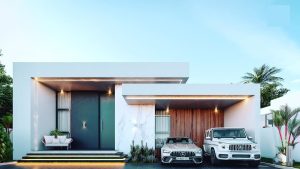
A typical 4-bedroom house in Ghana covers between 160 and 220 square metres of floor area. The standard layout includes a master bedroom with en suite bathroom, three additional bedrooms (typically sharing one or two bathrooms), a separate living room and dining area, a kitchen, a store room, and a covered verandah or porch.
More generous designs add a second en suite for a guest room, a separate family lounge, a laundry room, a boys’ quarters (BQ), or a double garage. Each addition increases your budget.
Cost Summary: 4-Bedroom House in Ghana (2026)
| Finish Level | GHS Range | USD Equivalent |
|---|---|---|
| Basic | GHS 600,000 – 900,000 | ~$54,500 – $81,800 |
| Standard | GHS 900,000 – 1,400,000 | ~$81,800 – $127,300 |
| Premium | GHS 1,400,000 – 2,500,000 | ~$127,300 – $227,300 |
These figures cover construction from foundation to handover. They exclude land purchase, land registration, permit fees, architect fees, and utility connection fees. Add 15–20% to your build cost to cover these additional items.
What Each Finish Level Means
Basic finish: Cement screed floors, louvre windows, basic sanitary ware, plain painted walls, standard security doors. Fully liveable but without luxury. This is the level most people achieve on a first phase of building.
Standard finish: Ceramic or porcelain tiles throughout, aluminium sliding or casement windows, fitted kitchen with granite or tile countertops, decent bathroom fittings (mixer taps, overhead shower), security grilles, exterior cladding or painting. This is the level most middle-income families target.
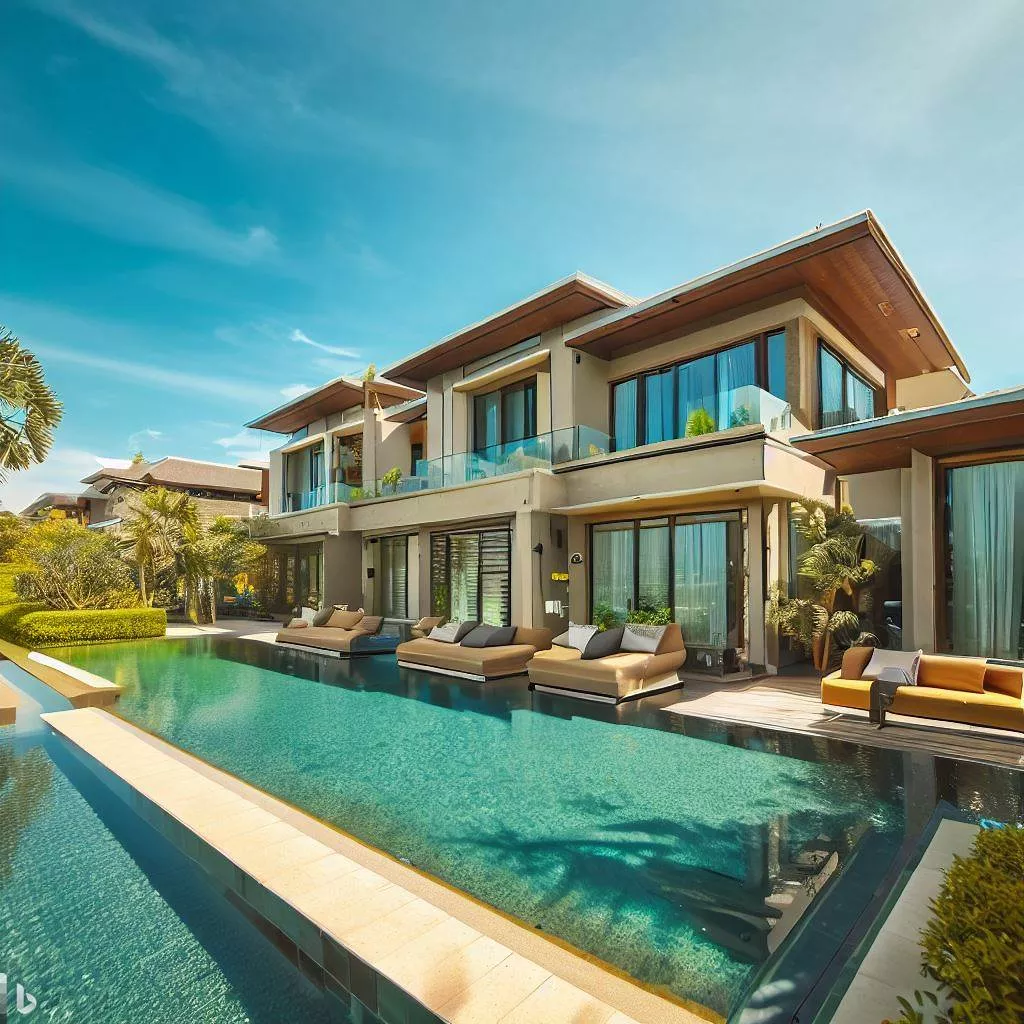
Premium finish: Large-format porcelain or marble tiles, hardwood or high-quality composite doors, fully fitted modular kitchen, stone or granite countertops, premium sanitary ware, smart electrical systems, false ceilings, external landscaping, perimeter wall with automated gate. This is the level you find in East Legon, Trasacco Valley, or Airport Hills.
Detailed Cost Breakdown: Standard Finish 4-Bedroom (Accra)
Here is a worked cost breakdown for a 180 square metre 4-bedroom house built to standard finish in Accra in 2026:
| Item | Estimated Cost (GHS) |
|---|---|
| Land preparation and site clearance | 30,000 – 50,000 |
| Foundation and substructure | 150,000 – 200,000 |
| Superstructure (walls, columns, beams, ring beam) | 200,000 – 280,000 |
| Roof structure and covering | 80,000 – 130,000 |
| Electrical installation (rough-in and final fix) | 35,000 – 65,000 |
| Plumbing installation (rough-in and final fix) | 30,000 – 55,000 |
| Plastering (internal and external) | 50,000 – 80,000 |
| Floor and wall tiling | 80,000 – 140,000 |
| Aluminium windows and doors | 60,000 – 100,000 |
| Security doors and burglar proofing | 25,000 – 45,000 |
| Kitchen fitting | 40,000 – 80,000 |
| Sanitary ware and bathroom fittings | 30,000 – 60,000 |
| Painting (internal and external) | 25,000 – 45,000 |
| Metalwork (gates, railings, fencing) | 20,000 – 50,000 |
| Contingency (10%) | 90,000 – 140,000 |
| Total (standard finish) | 945,000 – 1,520,000 |
How Location Affects Your 4-Bedroom Build Cost
Location affects your budget in two ways — through land cost and through construction cost. Material haulage, site accessibility, and local labour rates all vary by area.
| Location | Approx. Standard Finish Build Cost |
|---|---|
| Kasoa, Oyibi, Dodowa (emerging areas) | GHS 900,000 – 1,100,000 |
| Tema, Spintex, Adenta | GHS 1,000,000 – 1,300,000 |
| Accra central, Dansoman, Madina | GHS 1,000,000 – 1,350,000 |
| East Legon, Airport Residential, Cantonments | GHS 1,400,000 – 2,500,000+ |
| Kumasi (all areas) | GHS 850,000 – 1,200,000 |
The Real Cost Drivers: What Makes a 4-Bedroom More Expensive Than You Planned
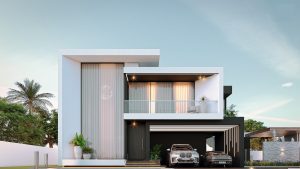
1. Going double-storey: If your land is small and you need a 4-bedroom within a limited footprint, you may be building upward. A double-storey 4-bedroom house is 20–35% more expensive than a single-storey equivalent due to the concrete slab between floors, additional structural requirements, and staircase construction.
2. Adding a boys’ quarters: A separate BQ unit adds GHS 80,000–150,000 to your budget but significantly increases the rental value and liveability of your property.
3. Tile selection: There is a massive price range in tiles available in Ghana. Basic ceramic tiles from local suppliers run GHS 40–80 per square metre. Imported porcelain or stone tiles run GHS 150–400+ per square metre. For a 180sqm house, the difference between basic and premium tiles can easily be GHS 100,000 or more.
4. Roof type and complexity: A simple hip roof over a rectangular plan is the most cost-effective. L-shaped or H-shaped building footprints create complex roof valleys and hips that add 25–40% to roofing costs. Every internal corner in your building plan is money.
5. Material price inflation: Ghana’s construction cost inflation has eased from its 2023 peak, but cement, steel, and roofing costs remain significantly higher than they were in 2020. Budget for current prices — do not use your uncle’s 2019 build as a reference.
The 4-Bedroom Build in Phases
Most Ghanaians build in phases. This is a smart and entirely practical approach to managing cash flow.
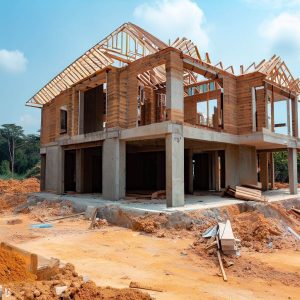
Phase 1 — Foundation and superstructure: Get the building to roof level. This is structurally the most critical phase and the one that demands the most oversight. Estimated cost: GHS 480,000–750,000.
Phase 2 — Roof: Get the building watertight. A roofed, unfinished building can sit safely for years while you raise funds for finishing. Estimated cost: GHS 80,000–130,000.
Phase 3 — Rough-in services: Install electrical conduits, water pipes, and drainage before plastering. This phase is cheap relative to its importance — skipping or rushing it creates enormously expensive problems later. Estimated cost: GHS 25,000–60,000.
Phase 4 — Plastering and screeds: Close up the building internally. Estimated cost: GHS 50,000–80,000.
Phase 5 — Full finishing: Tiling, windows, doors, kitchen, sanitary ware, painting, metalwork. This is the most expensive phase per square metre and the most visible. Estimated cost: GHS 300,000–550,000.
Financing Your 4-Bedroom Build in Ghana
Ghana’s mortgage market remains limited, but there are several financing pathways available.
Ghana Home Loans / HFC Bank: Mortgage products exist but require stable formal income, typically a minimum of 10% deposit, and come with interest rates that make them expensive over the long term. Check current products directly with these institutions.
SSNIT pension-backed loans: SSNIT members can access mortgage-linked financing products. Eligibility requires a minimum contribution history.
Remittance-funded build (diaspora): The most common approach for diaspora clients. Sending funds in USD or GBP and converting at the current rate means your foreign currency goes significantly further than it did five years ago. A well-managed GHS 1,200,000 build costs approximately $109,000 USD at current rates.
Phased self-funding: Save, build a phase, stop, save again. This is how the majority of Ghanaian families build, and it works — as long as the structural phases are done correctly at the start.
Get an Estimate for Your Specific Build
The figures in this guide are market ranges — your actual cost depends on your specific design, location, finish choices, and the professionals you work with.
- Use our free Residential Cost Calculator for a tailored estimate
- See all bedroom sizes in our 2026 comprehensive cost guide
- Book a consultation for a project-specific assessment
All figures are 2026 market estimates based on current Ghana construction industry data. Actual costs vary by design, location, material choices, and contractor. Always consult qualified professionals before committing to a budget.
Read Also:
Professionals You Need to Build Your House In Ghana
5 Ways to Become a House Owner in Ghana
Building Your House In Ghana-The Quick Easy Guide
How much is a plot of land in Ghana?
FAQ: 4-Bedroom House Building Cost in Ghana
Q1: What is the average cost of building a 4-bedroom house in Ghana?
A: The cost of building a 4-bedroom house in Ghana varies based on factors like location, materials, design, and finishes.
However, as of our knowledge cutoff in September 2021, the estimated cost range is between GHS 350,000 and GHS 800,000.
Q2: What does the building cost estimate include?
A: The building cost estimate includes construction materials, labor costs, architectural fees, permits, site preparation, foundation, framework, roofing, installations, finishes, and landscaping.
However, it’s important to consult with a professional contractor or builder to get a detailed breakdown of the cost estimate.
Q3: Are there any additional expenses that should be considered?
A: Yes, there are additional expenses that should be considered when building a house. Expenses may include land acquisition, utility connections (water, electricity, gas), design modifications, furniture, appliances, security systems, and unforeseen costs.
Q4: How long does it take to build a 4-bedroom house in Ghana?
A: The construction period varies based on design complexity, labor/material availability, weather, and construction team efficiency. Typically, it takes 6 months to 1 year to complete a 4-bedroom house in Ghana.
Q5: Can I reduce the building cost without compromising on quality?
A: Yes, there are several ways to reduce the building cost without compromising on quality. Cost-saving measures: Choose simpler designs, use local materials, compare prices, optimize for energy efficiency, work with experienced contractors.
Q6: Are there any government regulations or permits required for house construction in Ghana?
A: Yes, there are government regulations and permits required for house construction in Ghana.
This includes obtaining permits and approvals, adhering to regulations and codes, and ensuring environmental and safety compliance. It’s advisable to consult with a professional architect or contractor who can guide you through the necessary processes.
Q7: Can I get a loan to finance the construction of a 4-bedroom house?
A: Yes, there are various financial institutions in Ghana that offer loans specifically for house construction. These loans typically require a down payment and may have specific eligibility criteria.
It’s recommended to contact different banks or mortgage providers to inquire about their loan products and get information about the application process, interest rates, and repayment terms.
Q8: Is it better to hire a contractor or manage the construction myself?
A: The decision to hire a contractor or manage the construction yourself depends on your level of expertise, time availability, and the complexity of the project.
Hiring a professional contractor can bring valuable experience, industry connections, and project management skills, which can save you time and ensure the construction process runs smoothly.
However, if you have construction experience and the time to oversee the project, managing it yourself can provide more control and potentially save on contractor fees.